Here you will find the updated list of my most recent scientific papers: https://scholar.google.com/citations?user=SxT9DMEAAAAJ&hl=pt-BR
Thesis PhD: https://drive.google.com/file/d/1kpCFdwOmsrSKv-8GfaGdMmNuz722cPGj/view?usp=drive_link
Acoustics – Machine Learning – DSP
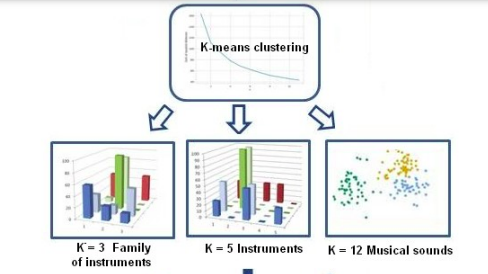
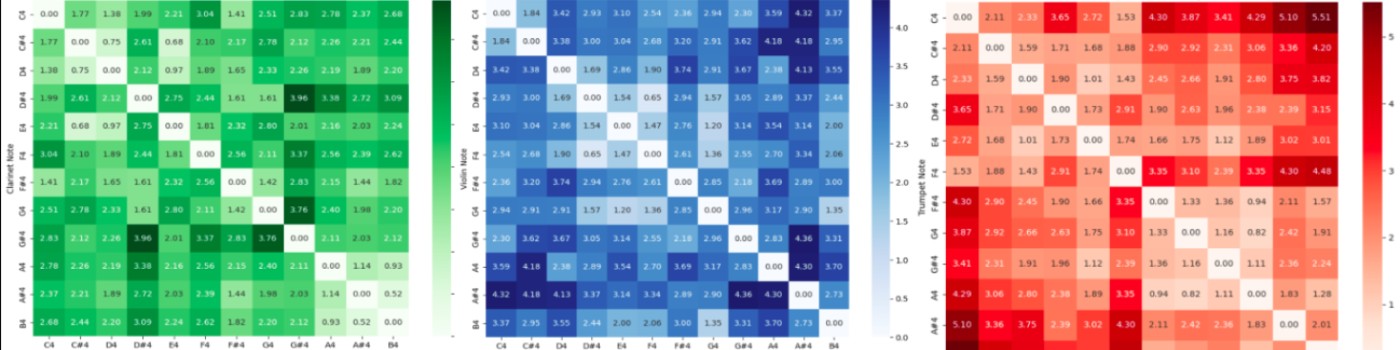
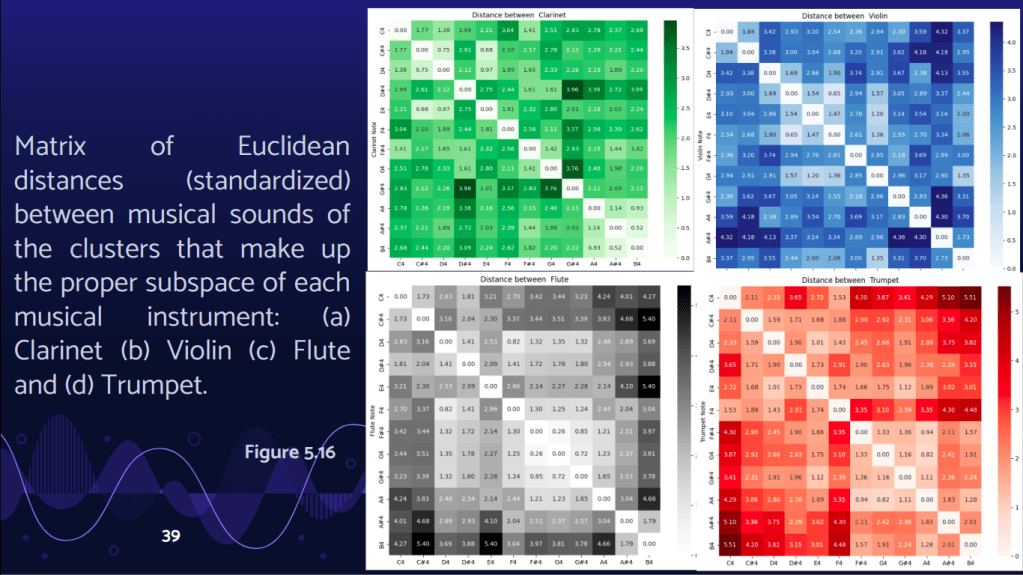
Through geometric distance between musical sounds in the abstract space, we explore Unsupervised Machine Learning techniques to establish categories of similarities between musical sounds, instruments, and family of musical instruments. The analysis showed that timbral similarity can be quantified geometrically, making it possible to identify groups of musical timbre.
Comparative Study of Musical Timbral Variations: Crescendo and Vibrato Using FFT-Acoustic Descriptor
Using the FFT acoustic descriptors and their representation in an abstract timbral space, variations in a sample of monophonic sounds of chordophones (violin, cello) and aerophones (trumpet, transverse flute, and clarinet) sounds are analyzed.
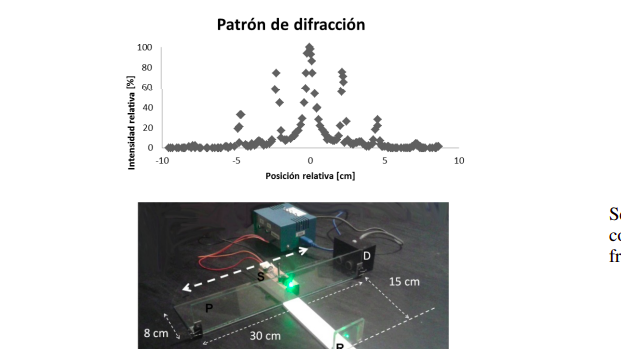
The proposed system incorporates data acquisition and processing technologies through the use of multi-sensors (ultrasonic position sensor, voltage sensors, light intensity, temperature, mechanical bending and Hall effect) and a PIC 16F870 micro controller, attached To a USB communication interface.
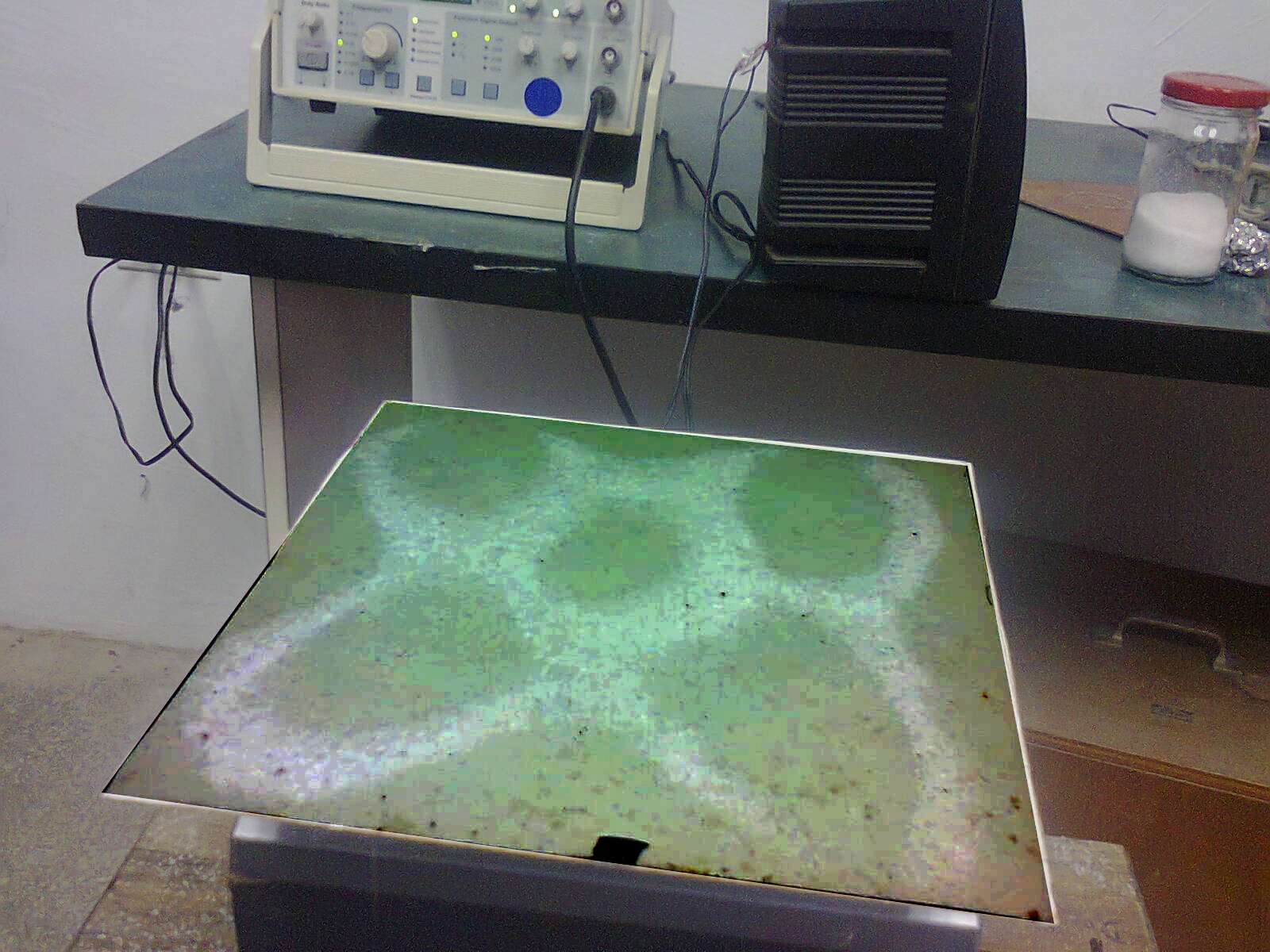
A didactic tool is presented for the study of the physical principles and concepts that govern musical sounds, which is based on the visualization of geometric figures formed by the agglomeration of particles on a metal plate depending on the frequencies (patterns of Chladni).
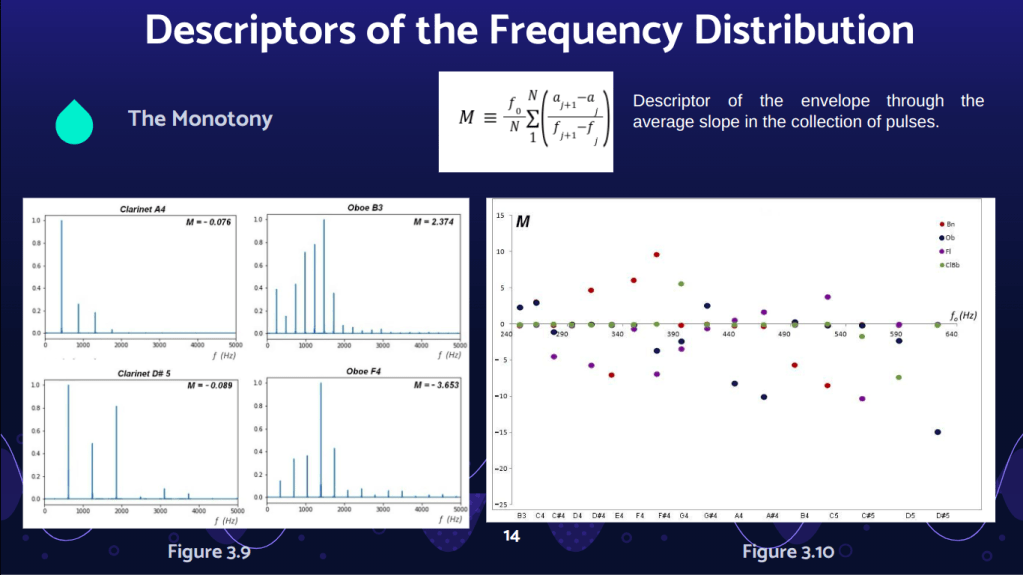
We present a minimum set of dimensionless descriptors, motivated by musical acoustics, using the spectra obtained by the Fast Fourier Transform (FFT), which allows describing the timbre of wooden aerophones (Bassoon, Clarinet, Transverse Flute, and Oboe) using individual sound recordings of the musical tempered scale.
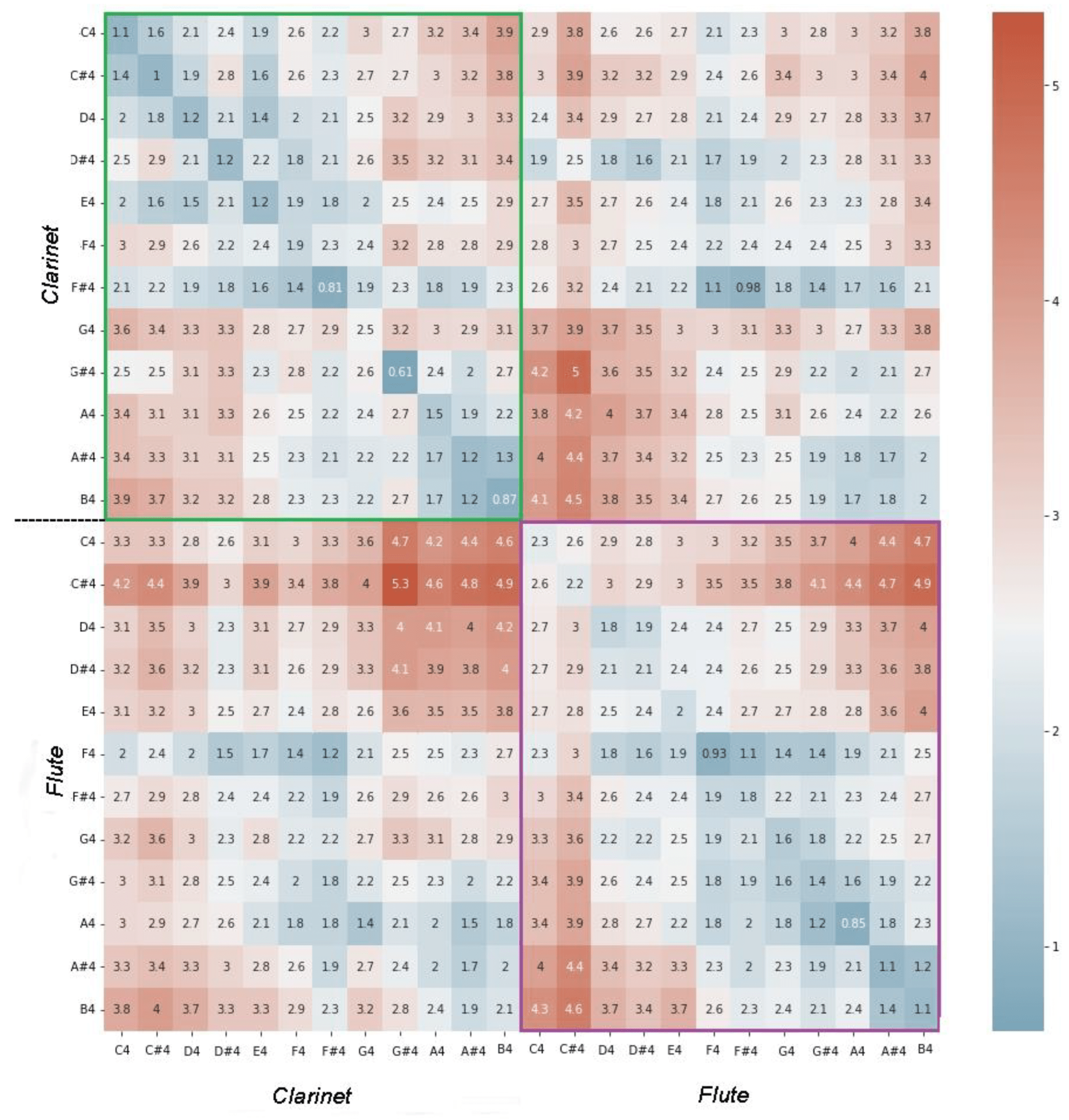
This paper evaluates a set of dimensionless descriptors for studying musical timbre in monophonic recordings of woodwind instruments from the TinySOl audio library, considering the region of frequencies common to all instruments in their three dynamic levels (pianissimo, mezzo-forte, and fortissimo).
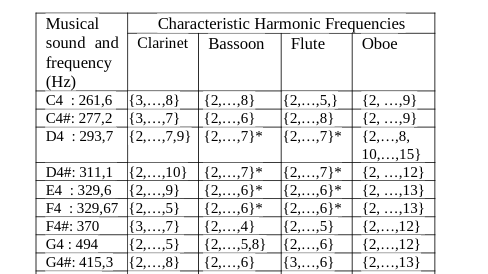
This paper presents a set of dimensionless descriptors to assess the musical timbre of woodwind instruments in recordings of the fourth octave of the tempered musical scale. These descriptors are calculated from the Fast Fourier Transform (FFT) spectra using the Python Programming Language, specifically the SciPy library.

We explore an abstract space with 7 dimensions formed by the fundamental frequency and FFT-Acoustic Descriptors in 240 monophonic sounds from the Tinysol and Good-Sounds databases, corresponding to the fourth octave of the transverse flute and clarinet.
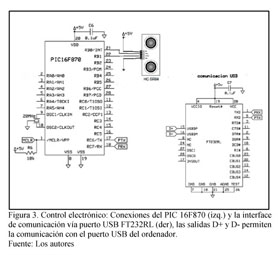
The proposed prototype is built upon the modern didactic concepts for the teaching of science, it also incorporates technologies for acquisition and processing data through the use of an ultrasonic position sensor and a PIC microcontroller joint with a USB communication interface.
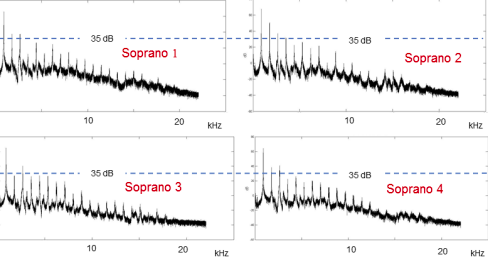
The following paper offers a study of the timbral quality, based on the characterization of the instruments of the woodwind family including recorders, transverse flute, clarinet, oboe, and bassoon, allowing to establish a mathematical physical interpretation of such aspects, through the use of Fast Fourier Transform (FFT), spectral power density (SPD) and spectrograms, for the digital processing of acoustic signals.
 Dra. Yubiry González